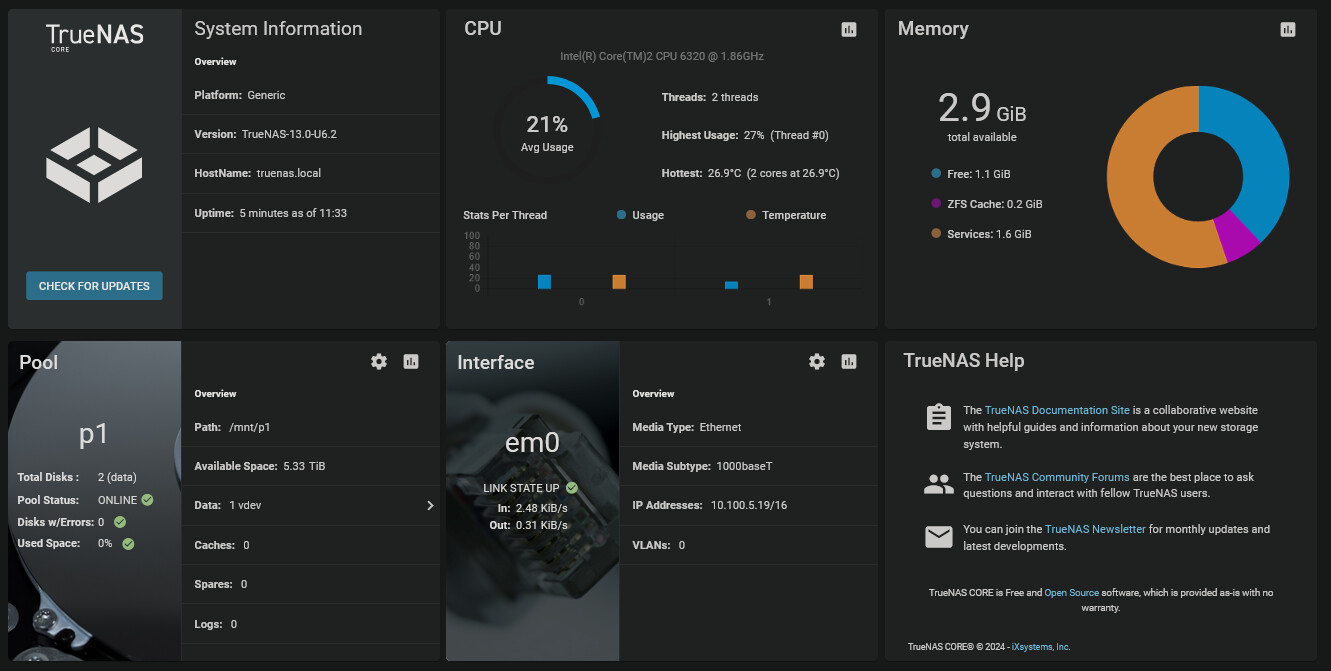
I have to do it with 32Gb. so far, i never had more than 32Gb and never felt the need to squeeze more in.
I have to do it with 32Gb. so far, i never had more than 32Gb and never felt the need to squeeze more in.
Primary system
128GB DDR4 ECC
Secondary system
Memory: DDR3 64 GB ECC
TIA
My DDR memory comes in modules of 5.25 x 1.23 inches or 133.35 x 31.25 mm.
Hi,
I want to collect some information about the average memory size among TrueNAS core users. As you already know, iX System will leave almost 5% of memory to deal with potential memory bursts. This fixed ratio may not be the best choice because 5% of 512GiB/1TiB is a large amount of memory.
If we have the memory size distribution, it would be easier to make a more scientific memory reservation policy.
64 G for my main home NAS on CORE, running jails and VMs.
32 G on my SCALE toy system
32 G on my CORE backup system
64 G on the CORE system at our Karlsruhe office running time machine backups and VMs
32 G on the CORE system at our Frankfurt office running time machine backups and VMs (fewer colleagues in Frankfurt)
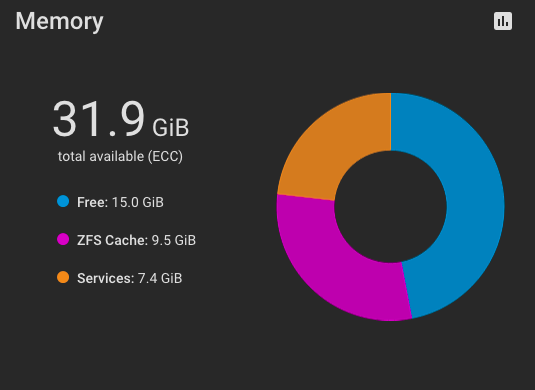
256 G on the two CORE systems in our data centre that serve as hypervisor hosts only (e.g. VMs)
I had a hard time running VMs in CORE. Any trick to it ?
Edit: I guess you host the VM drive only.
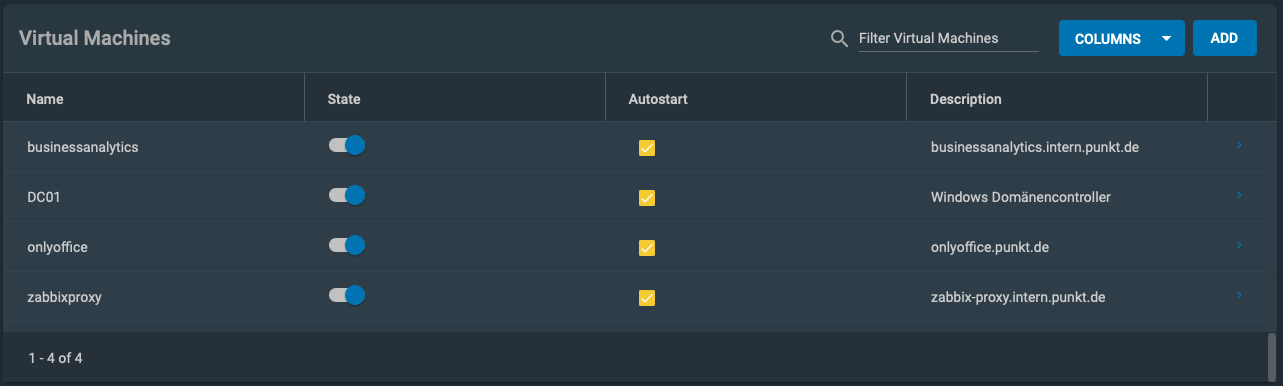
Au contraire! We replaced a 3 machine VMware cluster with 2 TrueNAS CORE systems and migrated all our VMs. This includes our two AD domain controllers.
In production 24x7 - my company depends on it. No problems whatsoever, just rock solid operation.
At home I run Linux and Windows on CORE, too. Only thing missing are two features which are present in FreeBSD and bhyve but iX will probably not bring to CORE, anymore:
Bhyve is a solid high performing hypervisor, and combined with the Tier 1 platform for ZFS, namely FreeBSD, it really shines.
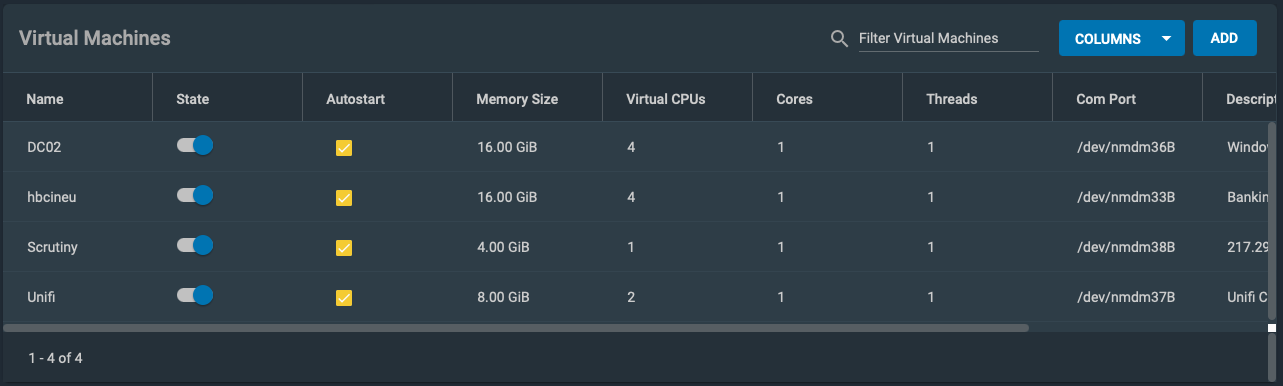
I see that you have 4 CPUs, 1 Cores, 1 Threads. Why CPUs instead of Cores ? Is there something that makes it preferable ?
( or should I open a post for this, or DM ?)
No need to DM - we can discuss this in public, no problem.
Honestly … no idea. I set them up this way years ago and they have been running fine ever since.
Today when I create a new VM I tend to go for
Again, no idea if that is “optimal”, but as long as the VMs perform as expected and I have plenty of resources left, I don’t really care. I’m an operator - I keep things running reliably. 100% optimal performance is not important. Performance matching the workload is.
Addendum: and I am a bit reluctant to change the topology, because … Windows 
I really don’t get this thread. All my full-size DIMMs are exactly 133.35 mm wide, with wildly varying heights, or 67.60 mm wide for SO-DIMMs.
Edit: The real German guy was more efficient at pointing this out than the diluted German guy (that’s me). Please direct your reactions to Please show your DDR memory size! - #24 by pmh
Awww, DDR5, are you poor? Maybe Santa will bring you some MRDIMMs for Christmas.
Sure, but there’s no single percentage that is going to be perfect for everyone, so I don’t really see the point of asking random people how much they have.
The problem as I see it is that you have people using anywhere from 2GB-ish to over 512GB and you need to/should account for the variance and corner cases. Logic and some smart code will get you there. Obviously 2GB is critically low, but that doesn’t mean memory code should deliberately fail in that scenario.
This is certainly how I learned (the hard way) to do it for boring performance and stability 10 years ago. Can’t imagine a reason to do it differently for the majority of “fits on a single physical CPU” VM workloads.
Sorry. I believe you can dope out the real meaning of my words from the first post of this thread. I mean in GiB, not in physical size.
It is serious, don’t joke, please.
Several months ago, I posted a thread that the memory reservation for big memory-size users is not good. However, only a few of the users responded to me.
If most of the users don’t have so much memory, they won’t be annoyed by the problem. Anyhow, you can treat this thread as a memory quantity probe which can help me to understand something. And yes, this probe is random but sometimes random tests can also make sense.
Exactly. That’s where the ADMIN comes into play.
Patrick from STH claims that industry folk have been calling them “Mister DIMMs” and I am going to do my damn best to make sure that catches on. We live in a GIF versus JIF moment, and we must make the difference.