Hello,
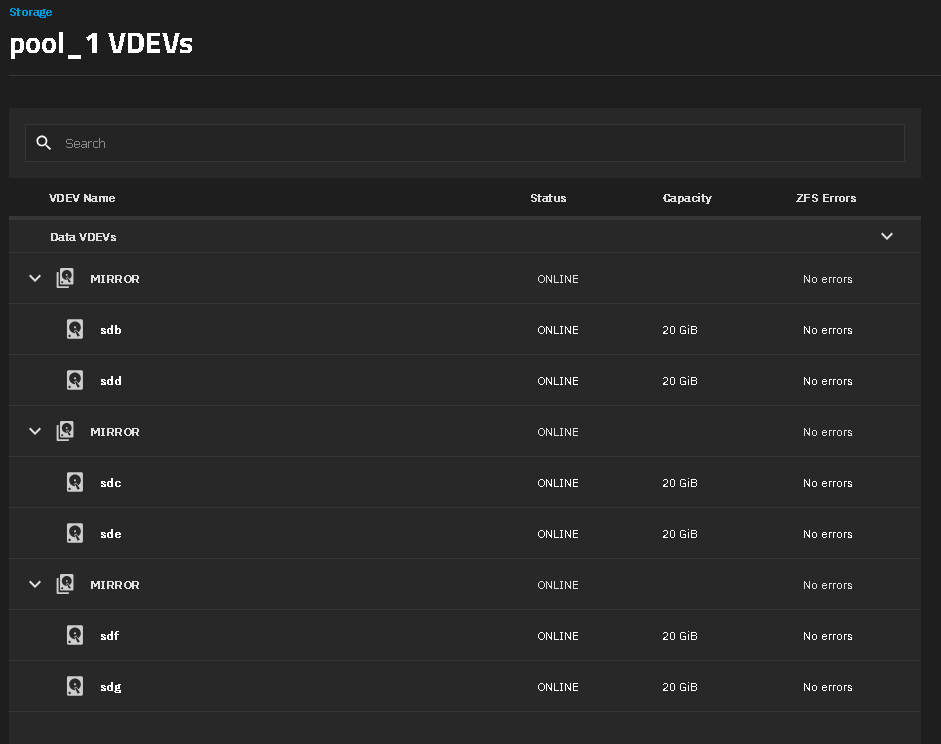
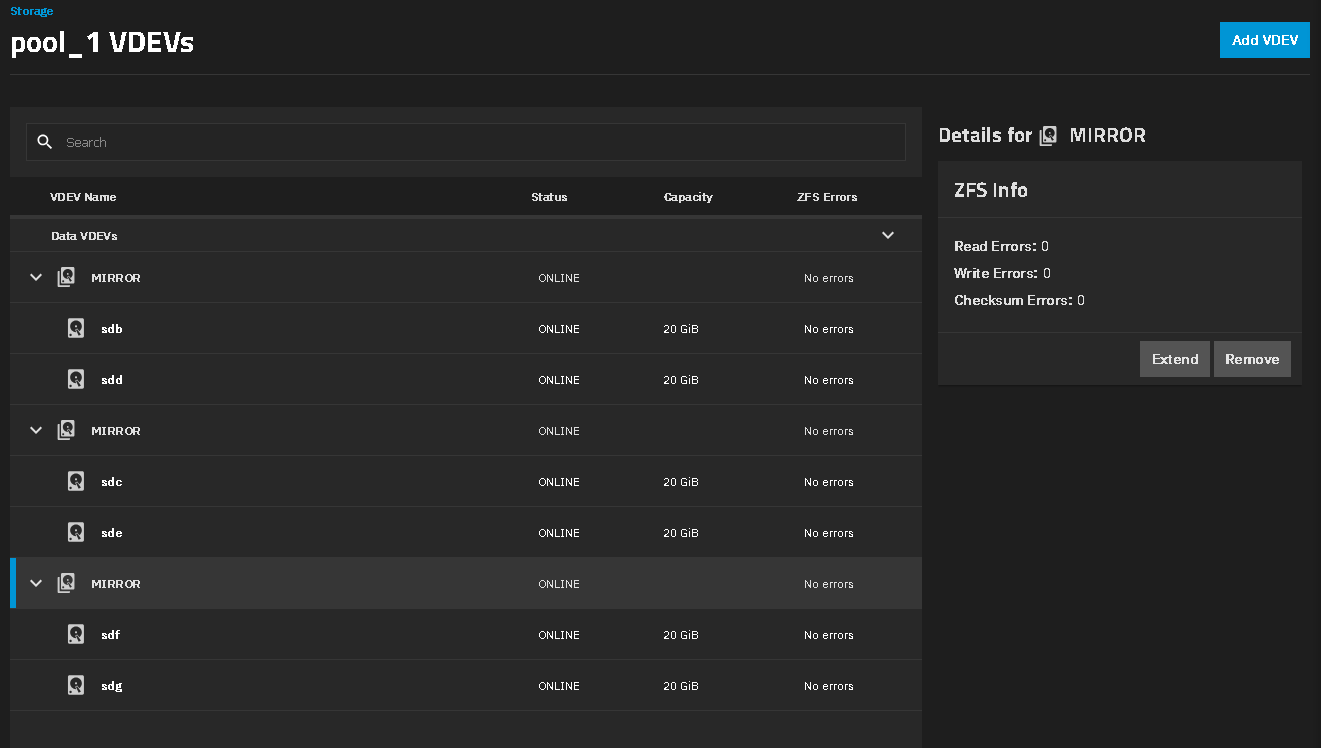
I’m looking for confirmation from my research and I think I may be hosed. I have 1 pool consisting of 4 mirrored vdevs. I had 2 drives go bad, both from different vdevs and I had 1 spare. I replaced one bad drive with the existing spare which leaves 1 vdev with no mirror.
I ordered another drive of the same series DC HC520, the only difference is the last number in the part number: 0F29560 vs 0F29561. My current drives end in the 1 which are self-encrypting drives and the one I ordered ends in the 0 which lacks that feature, otherwise they are the same. Needless to say, the drive I ordered is 10.83 TB instead of 10.91 TB so I can’t add the new drive to the existing vdev.
My next thought was to remove the vdev that has the 1 drive, add the new drive then re-add the old drive (which I think would shrink to match the new drive). However, in the TrueNAS documentation I read the following:
The corollary matters more than the rule: if a top-level vdev is lost, the pool is lost. Because data is striped across all top-level vdevs, there is no copy of its contents anywhere else. A single non-redundant disk added to an otherwise mirrored pool therefore puts the entire pool at the mercy of that one disk.
This leads me to believe that doing what I was planning to do would destroy the pool and I would lose the data (I have back-ups and can get back what really matters) but it would still mean getting 30 TB of data back on the server which doesn’t sound fun.
My question is: Am I understanding that correctly? Would removing the drive (and consequently the vdev) that has no mirror, adding the new drive and re-adding the old one to create a new vdev mirror, destroy the pool?
If so, I see 4 options:
A) Do it, get back to a mirrored setup (maybe do more than 1 pool this time around) but have to get all my data back on the server.
B) Return the new drive, order another drive that has the exact same model number and hope it matches the 10.91 TB of my existing drives if it does then I’m golden. Though I know it could still be a different size.
C) Order 2 new, matching, drives and create a new pool. I could then do the multi-pool option, continue to expand with new drives as others fail and pray that the 1 drive vdev holds out long enough.
D) Order a larger drive (14TB instead of 12TB) and have it shrink to match the existing 10.91 TB drive. I’ve always ordered 2 of the same drive so I’m not 100% this is how that works.
Am I missing anything? Or does all that sound correct and I just need to pick what I deem as the least worse of the situation?
Thanks for the input and advice!