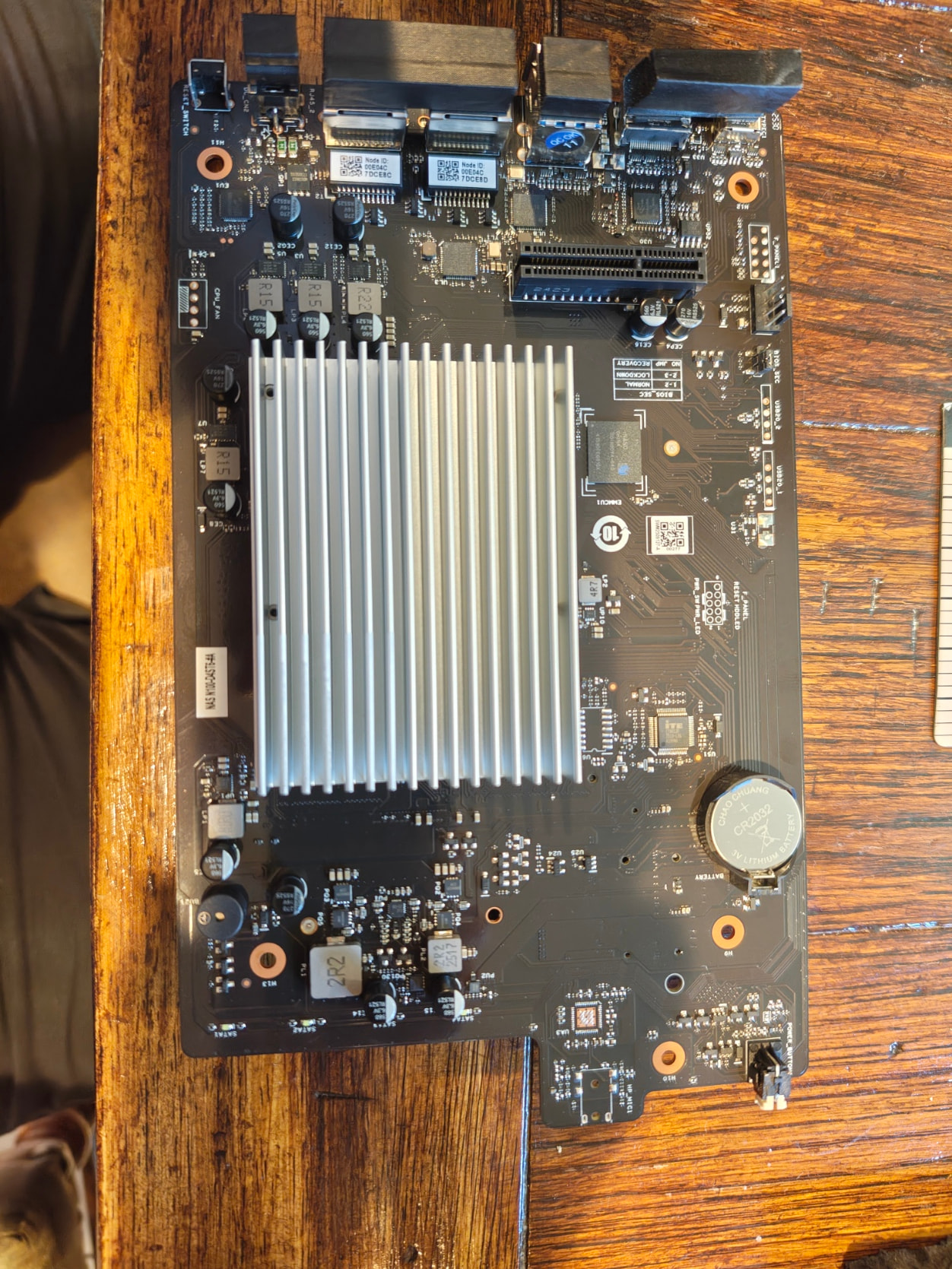
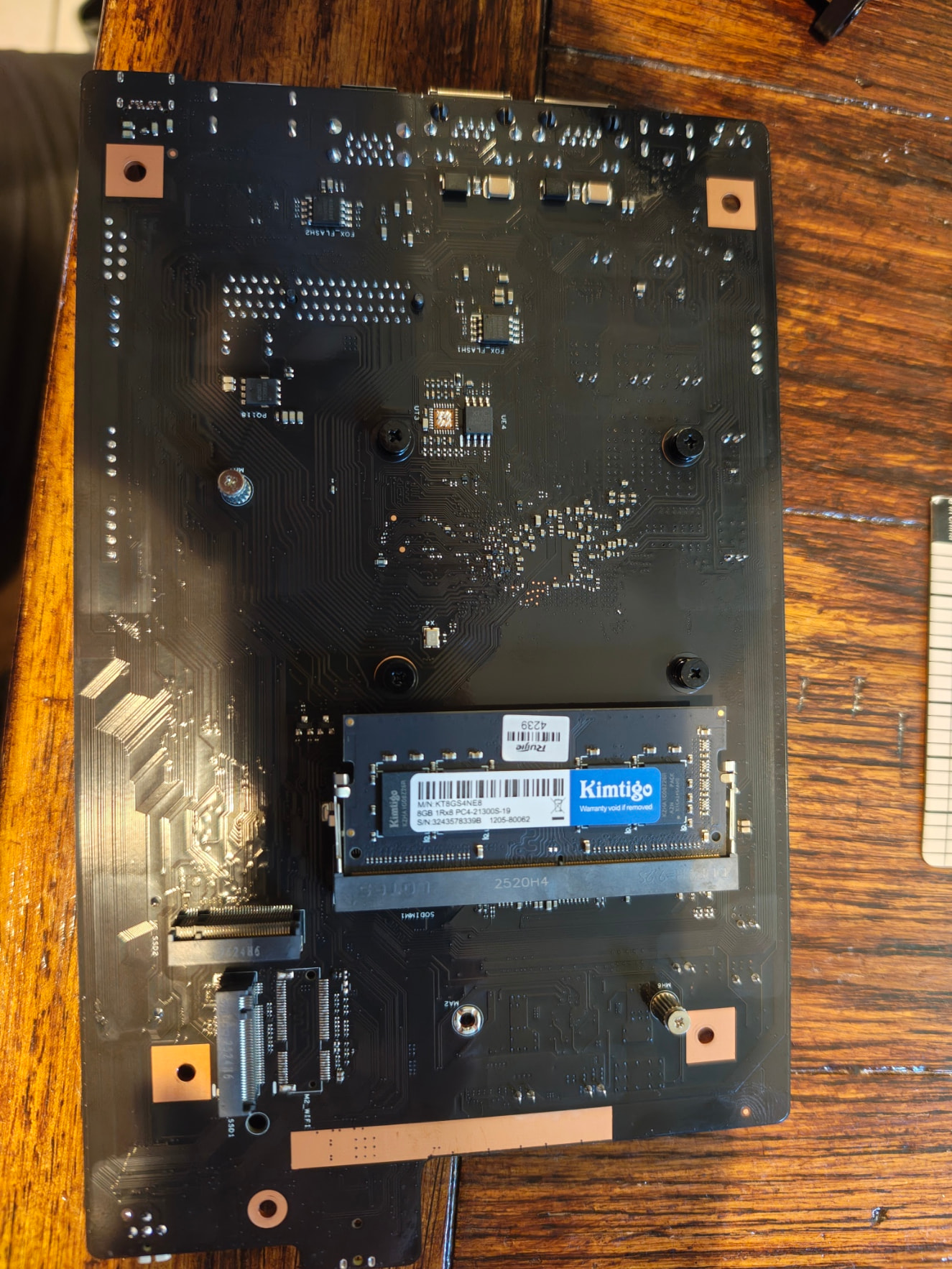
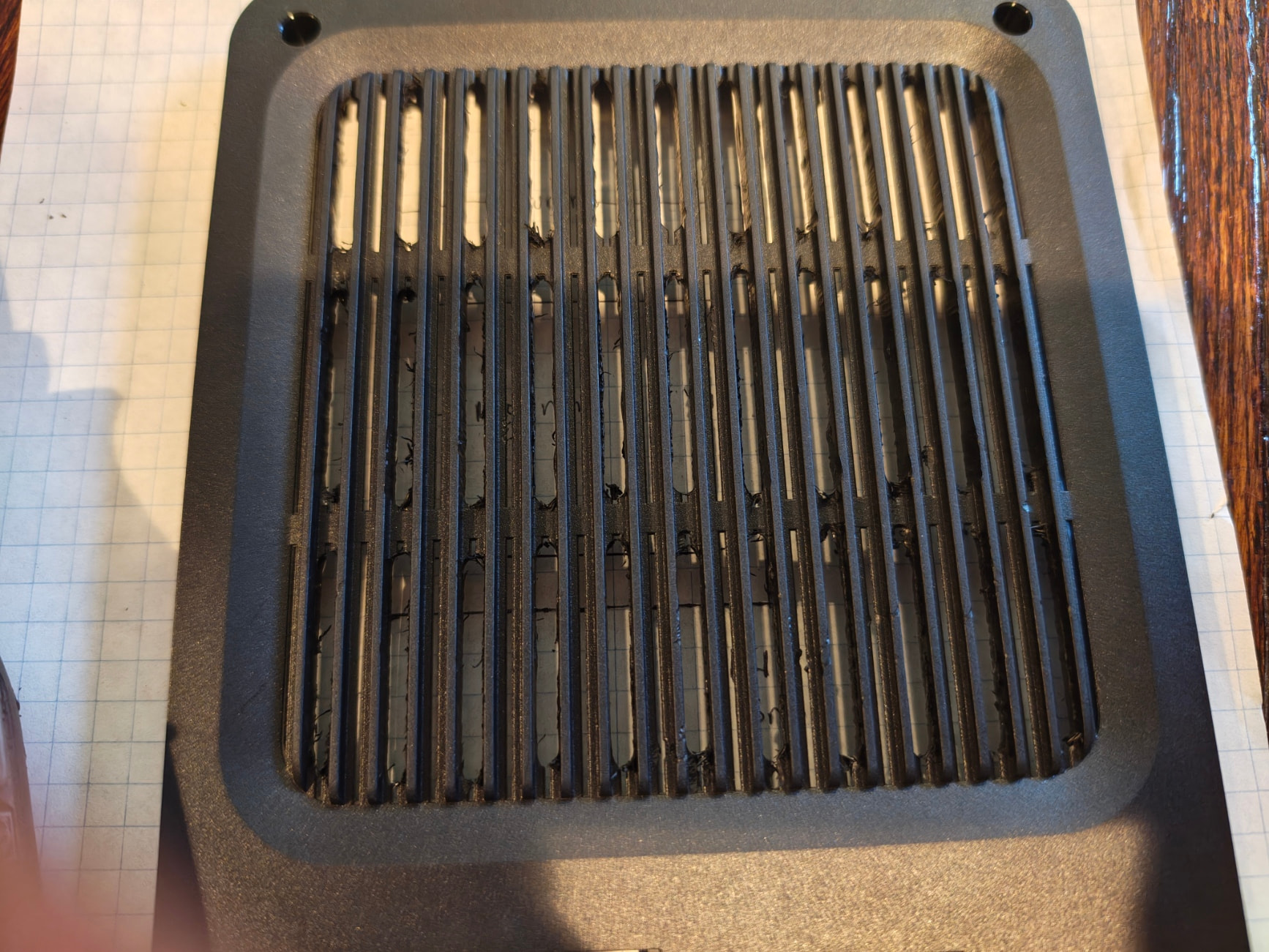
I recently acquired a few of these puppies under deep discount with the intent of them being low power sync targets I could drop off and share with friends.
Currently going for $400 as an asking price, but I got them at a steal for a quarter of that.
Specs are below minimum at just 8Gb (single slot DDR4 non-ECC) and an N100 Intel chip. But apparently being Intel based means they have a real BIOS inside so messing with the bootloader isn’t as fiddly with arm-based systems.
The TrueNAS installer gets very confused because the eMMC has two 4Mb partition slices, so I ended up making it install to an appropriately-sized virtual disk and DD’d it over. Apparently there are some shell commands you can use to make it not read-only that might help let the installer run through, but I didn’t have the patience.
Note that the eMMC’s write performance is shadowed by a portion being slated for SLC mode, after that cache gets exhausted the write performance is about 35MBps, so it will take about half an hour to fully write the 64GiB-ish drive.
The LAN ports are labeled in reverse, enp3s0 is the left port, enp2s0 is the right port (closest to the power jack). They are Intel Corporation Ethernet Controller I226-V (rev 04).
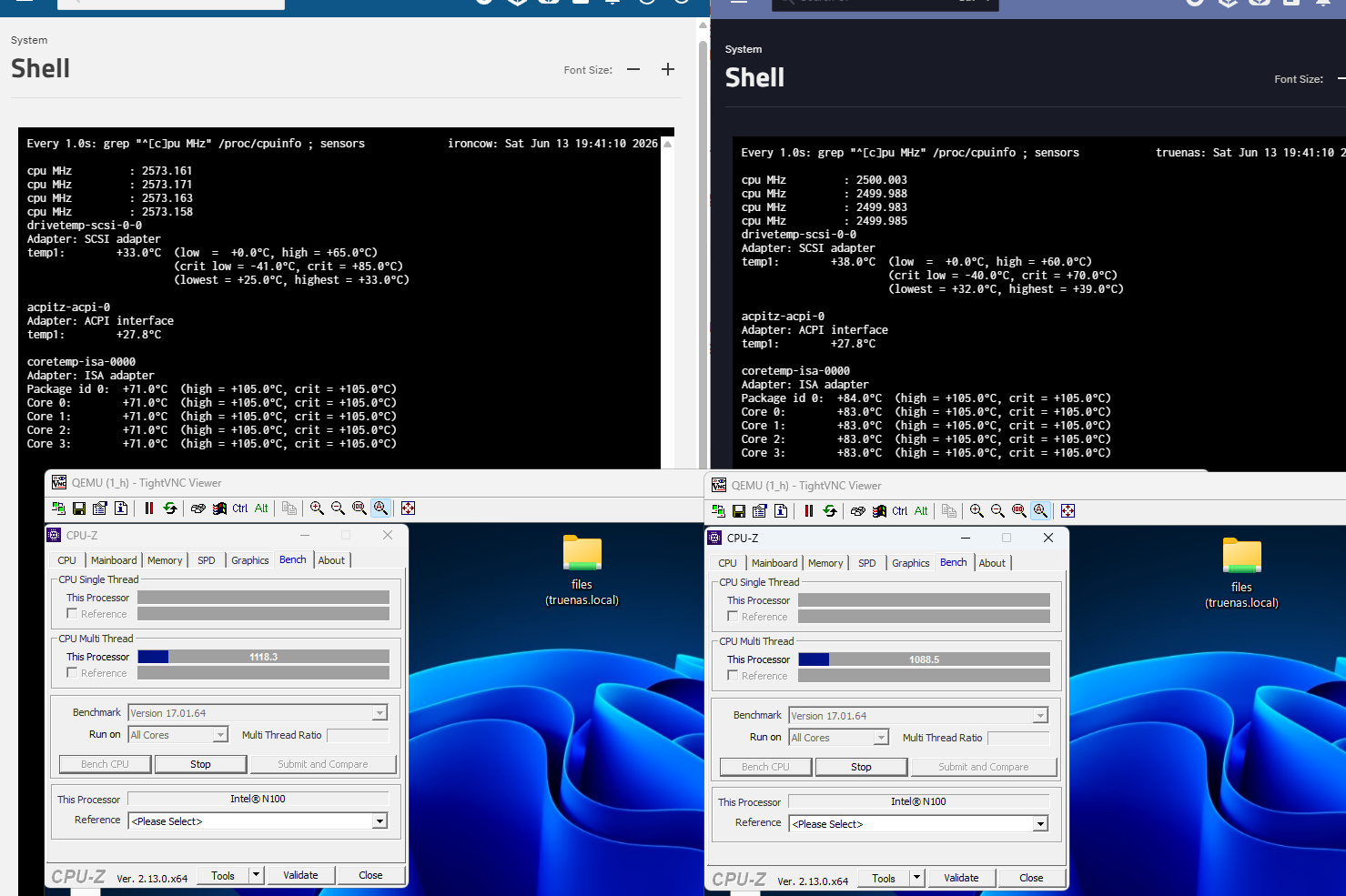
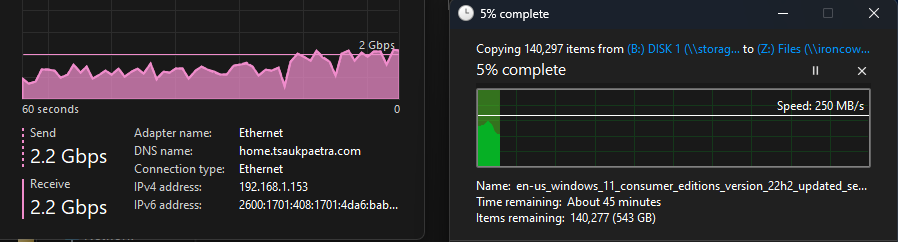
Performance-wise the N100 is nothing to write home about. This unit is passively cooled, the CPU heatsink does not have a fan (though it should be possible to replace it with an active cooler once you add the appropriate fan socket, it is not populated). The BIOS does appear to power-limit it, dropping the boosts to only about 1.2GHz, which will greatly impact performance if you’re going to try taking advantage of the 2.5Gbps interfaces, but should be fine for single-gig speeds.
There are two NVMe slots accessible through easy disassembly of the unit (there are only a few Phillips-head screws in easily identifiable locations, the rear panel is the only one that needs to be removed), I’m unsure how many lanes but I don’t assume it would matter.
The CPU does not exceed 55C under full load so I’ll try messing with the power settings in the BIOS, maybe see how large a stick of RAM I can slide into the single slot available, but so far things are going relatively well for my intended purpose.
I’ll report back if anything interesting happens with the power limits tweaking.
 )
)